
Fire Protection
Fire ProTECTION
The threat of fire within a building can be one of the quickest ways in which to undermine security. It is also important to ensure that security products, where possible, can contain the threat of fire. Not only obvious elements such as doors but also walls and windows. If a building is on fire then security and security systems are particularly vulnerable.
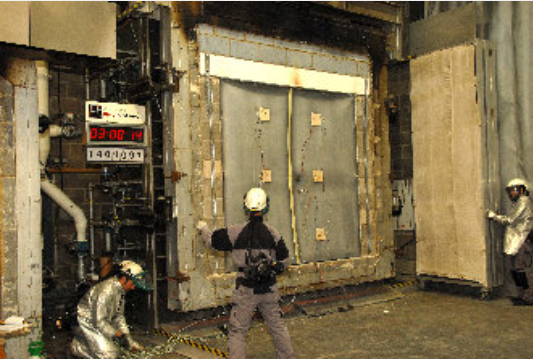
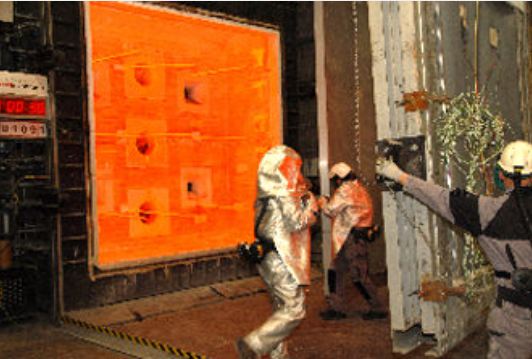
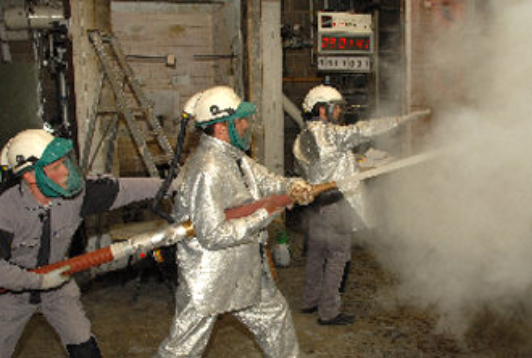
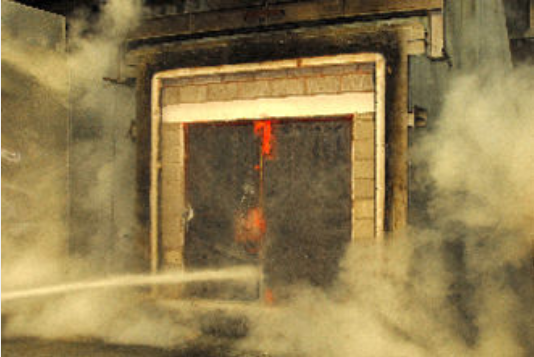
Fire testing on products is particularly important. European testing is onerous and below we have a video showing a ‘U L fire test with Hose Stream’ which in itself introduces a further element for consideration. At the end of the test (3 hours in this case) the doorset is removed from in front of the furnace and subjected to a hose stream test for a further 3 minutes. This is known as a ‘rough handling test’ and is designed to test the physical integrity of the doorset in the event of a fire. The video clearly shows that that the security doorset, after having undergone a 3 hour fire test, remains ‘a security doorset’.
In some instances, it is important to know that the door that is protecting people and property from blast, ballistic and physical attack can also provide fire resistance to a predetermined time. This allows planners to devise escape routes throughout buildings to take people to safety. It also allows for contingency planning to protect equipment as well as people.
We offer product certification to BS EN 1634 and BS 476 Part 22, up 30 minutes, 60 minutes, 90 minutes, 120 minutes and UL 10C 3 hours fire resistance in timber and up to 240 minutes in steel.
Testing
- U.L. Tested Security, blast & ballistic doors.
- NFPA 252 Tested Security, blast & ballistic doors.
- Test Houses
- Certification from BMTRADA – Warrington – IFC and Intertek
- Cambridge Fire & Research
If you would like any more information on how we use Fire Rooms to test our products, then please get in touch

Frequently Asked Questions
What does “Fire Protection” mean ?
At Blast & Ballistics, Fire Protection means designing fire-rated security doors, windows and screens that not only resist fire for a specified period, but can also be combined with blast, ballistic and physical attack protection where required. This allows planners to maintain life safety, protect equipment and create compliant escape routes, without compromising on security
What fire test standards do your products meet?
We offer independently certificated products to BS EN 1634 and BS 476 Part 22, with fire resistance ratings of 30, 60, 90 and 120 minutes, plus UL 10C up to 3 hours in timber and up to 240 minutes in steel doors. These tests confirm that the complete doorset or screen continues to provide integrity for the full duration of the fire test.
What is the UL 10C “fire and hose stream” test and why is it important?
In a UL 10C test, the doorset is exposed to furnace temperatures for the full test duration (for example 3 hours), and is then subjected to a high-pressure hose stream for several minutes. This “rough handling test” checks the physical integrity of the door after a major fire, ensuring that it still behaves as a security doorset rather than collapsing when impacted by water or debris during firefighting.
Can your fire-rated doors also be blast- and bullet-resistant?
Yes. In many projects it is essential that a door protecting people and property from blast, ballistic and physical attack can also provide certified fire resistance. Blast & Ballistics offers security, blast and ballistic doors that are fire tested to UL 10C / NFPA 252 and equivalent European standards, so a single doorset can satisfy multi-threat and life-safety requirements.
Where are fire-rated security doors and windows typically used?
Fire-rated security products are widely used anywhere that both fire and security performance are critical – for example industrial and petrochemical plants, data rooms, control rooms, escape corridors, cash and secure areas, government and critical infrastructure buildings. Having proven fire resistance allows designers to plan safe escape routes and protect key equipment zones while still maintaining a high level of blast and ballistic protection.