
Blast And Ballistic Periscope Vents And Ducting
- Designed primarily for commercial and military environments
- PPC factory applied finishes in a wide range of RAL colours
- For internal and external applications
- Can be installed into walls, panels and doors
- Available in all sizes
- Can be installed as recess or face mounted with flange
Product Description
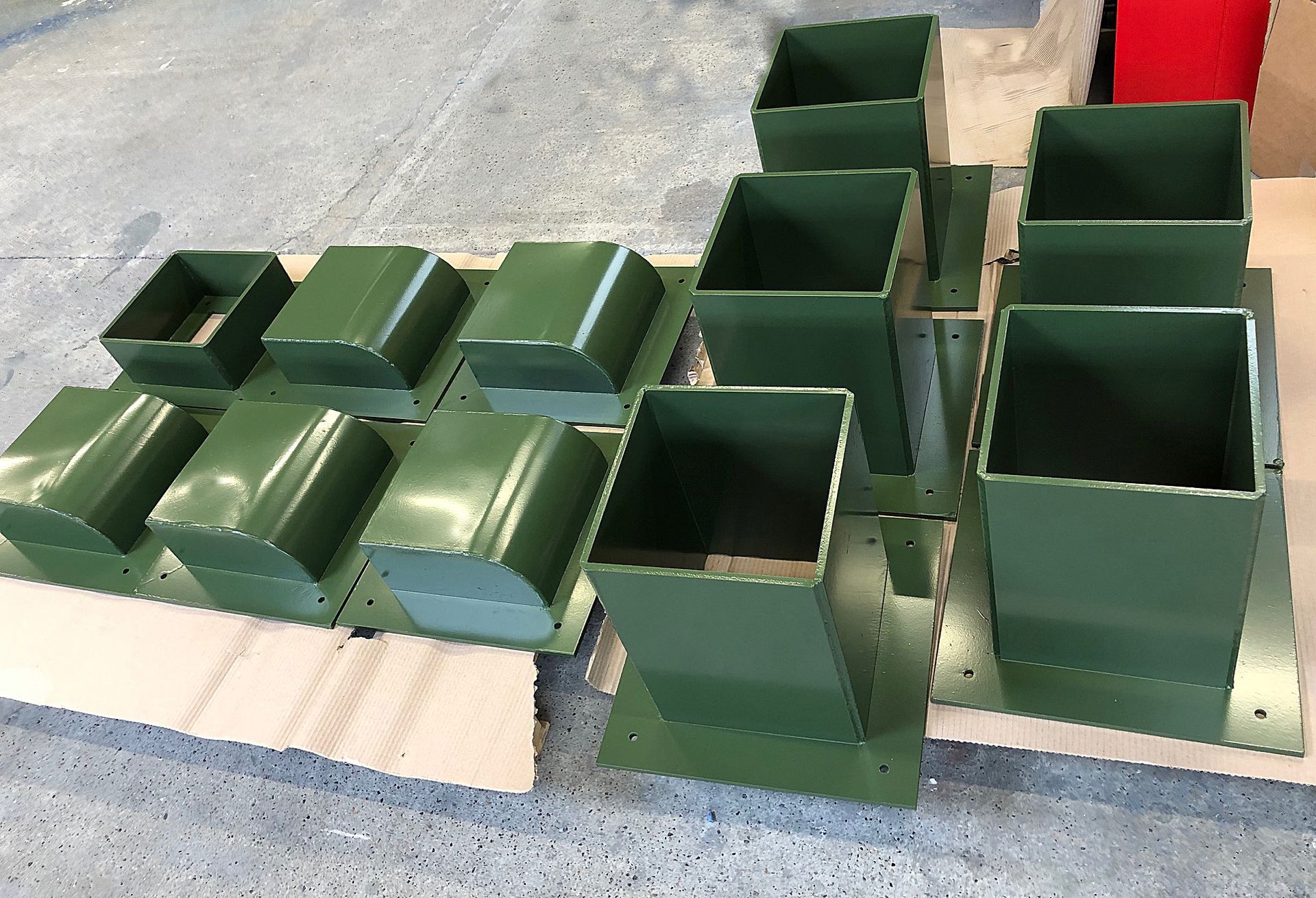
Blast and Ballistic Periscope Vents and Ducting can be used in numerous applications, ranging from military to commercial offices.
The product is most commonly used to transfer a blast throughout a building to the outside of the premesis.
The product is bespoke and can accomodate numerous blast pressures. Please get in touch to discuss your specific project requirements.
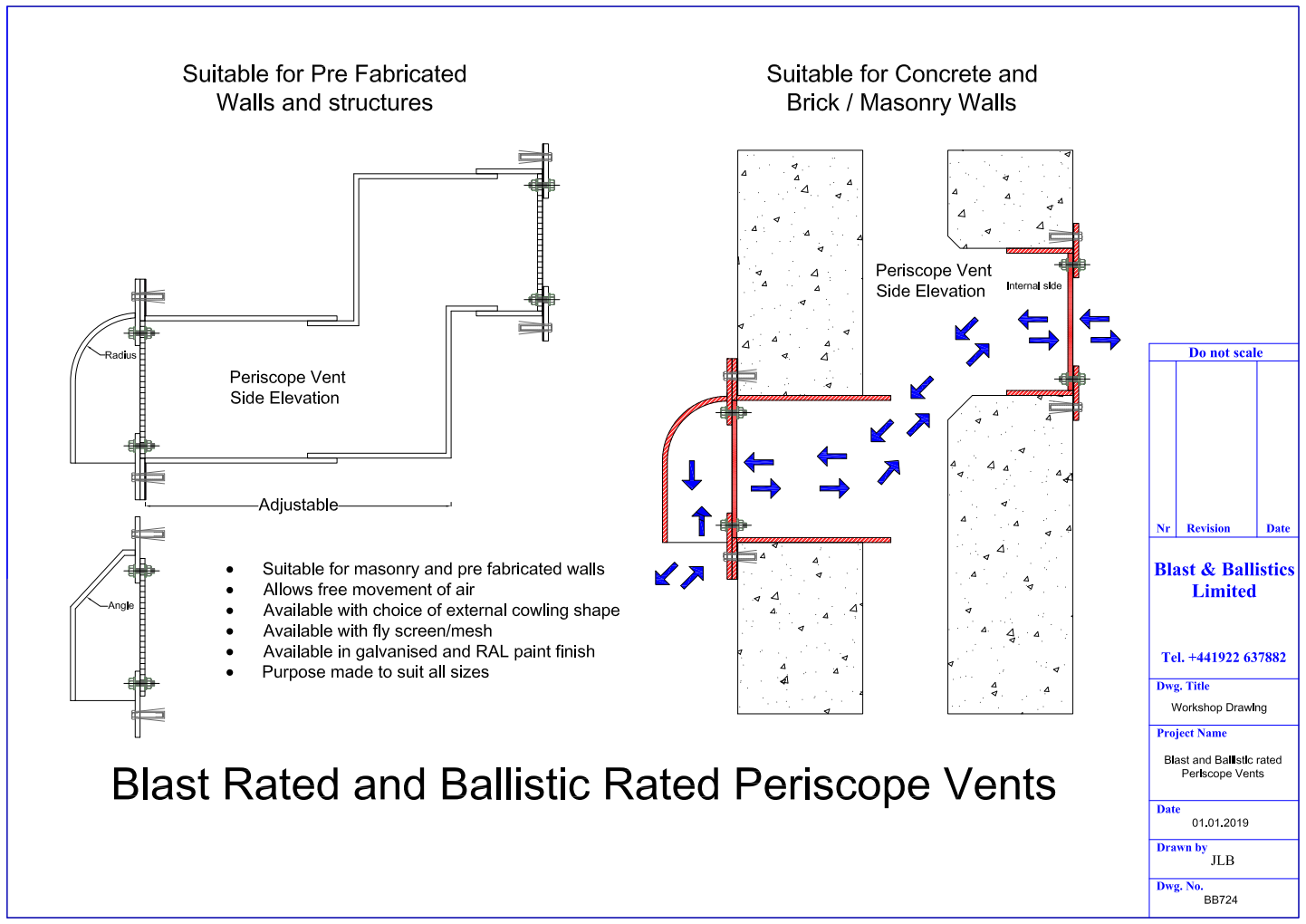
The offset design of the periscope vent affords privacy and security in removing direct line of sight through the vent.
Advantages
This product can be incorporated as part of a wider package to include Blast and Ballistic Louvres, vents and glass to provide a holistic product for a variety of uses.
This is commonly used in data centres where a blast may initiate in a room and needs to be vented through ducting and finally through a blast louvre.
Read more about our
Fixed Blast Louvres which can be incorporated into this product.
Features
- Available in a factory PPC Finish, Mill Finish and Galvanised.
- Can be used for both internal and external applications, installed into walls, panels and doors.
- Can be installed as recess or face mounted with flange.
| PROFILE |
|---|
| Fabricated, folded or drawn steel profiles |
| Available in Steel and Stainless Steel |
| FINISHES |
|---|
| Factory Polyester Powder Coat (PPC) finish |
| Mill Finish |
| Galvanised |
| AVAILABLE SIZES |
|---|
| Minimum 150mm x 150mm aperture |
| With additional units - indefinite |
| WEIGHTS |
|---|
| Varies with blast resistance required but minimum 25kg/m2 |
| STANDARDS & CALCULATIONS |
|---|
| Each uinit has supporting independent third-party calculations available upon request |
| BLAST RATINGS |
|---|
| Individually calculated to meet and exceed required blast ratings |
| Intended to protect against fragmentation if required |
| OPTIONS |
|---|
| Further structural frameworks to support specific wall apertures and applications |
| FIXING HOLE POSITIONS |
|---|
| Fixing hole positions can be adjusted to suit different wall depths and thicknesses |
| SHIPPING |
|---|
| Supplied in International Shipping Crates for dispatch |
Typical Areas of Application
· Military Buildings
· Air Conditioning and Ventilation / HVAC
· Chemical and Petroleum Industry
· Paint, Varnish Manufacturers
· Energy/ Mining Industry
· Co-Generation Plants
· Recycling Centres
· Sewage Treatment (by-product recycling)
· Automotive (air bag, mfg. Plant lines)
· Grinding/Pulverizing processes (airborne dusts)
· Ink Manufacturers
· Energy Storage Systems (ESS)
· Industrial Processing Equipment
· Paper Process (solvent use/storage)
· Laboratory Test Facilities
· Hospitals (gas and/or flammable storage areas)
· Brewery Facilities (grain storage/processing)
· Fossil Fuel Plants (coal dusts)
· Food Processing (airborne dust)
· University Labs (chemical lab store rooms)
· Grain Milling Facilities (airborne dusts)
· Nuclear Power Stations
· Printing Companies (solvent use/storage)
· Gas/Vapour Handling Equipment
· Dust Collection Systems
Sample Drawing
Frequently Asked Questions
Why do I need a Periscope Vent?
Periscope Vents are used to channel blast overpressures from the internal area to the external void outside of the building where a direct line of sight is not available or is preferred.
It also adds a layer of security by removing a direct line of sight into the building.
Why is blast ducting necessary?
Blast ducting is necessary in some instances because the blast may occur inside of the building which is not adjacent to an external wall. It is therefore important to channel the pressure safely through the building to the point of exit.
How is ducting made?
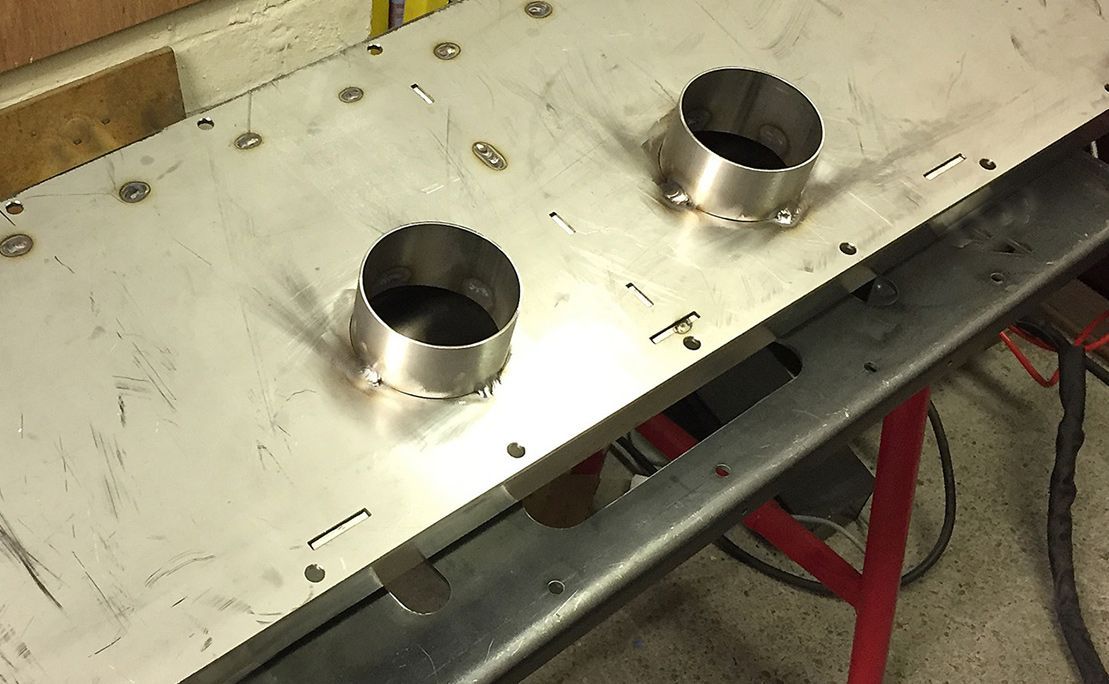
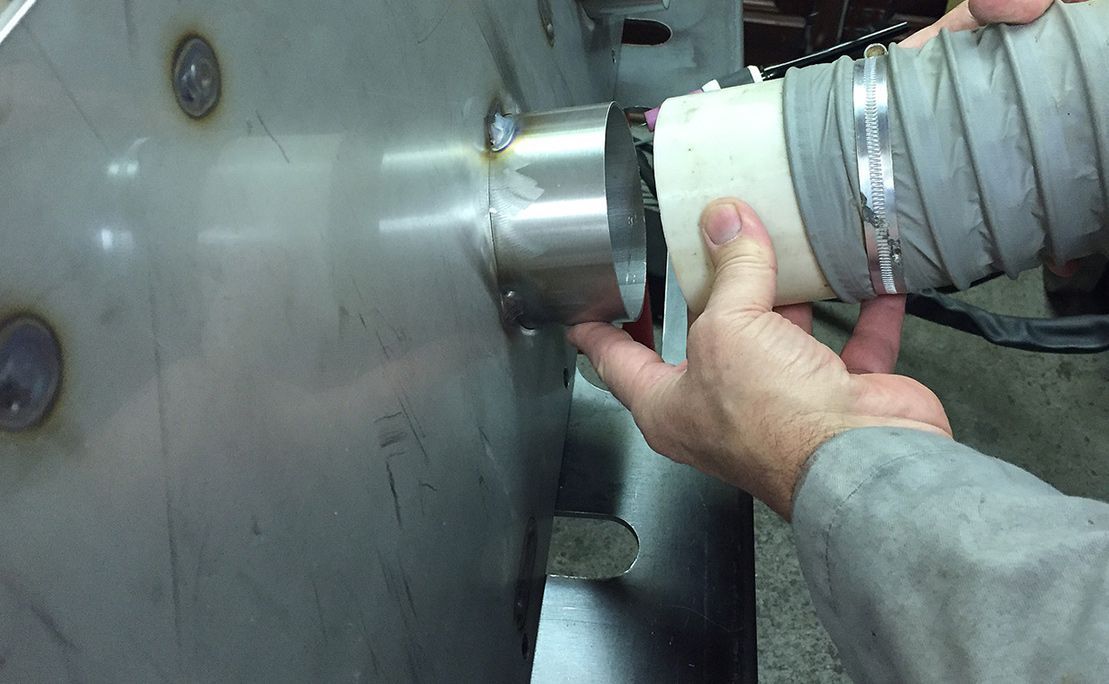
Ducting is normally made in steel, either fabricated, folded or welded in detail, but always using material commensurate with the relevant blast load.