
Blast Consultancy
Blast Consultancy
Blast protection is still the most demanding of all protection levels to achieve. Blast waves move in all directions and are channeled and funneled by buildings of all shapes and sizes. They can literally be bent around objects when meeting buildings and obstacles. Of course, if we can predict this happening then we can both take appropriate actions and also actually use this to our advantage. Blast and Ballistics Ltd can design out potential life threatening situations with the use of computational blast modelling and supported by tested and proven blast doors, blast windows and blast walls.
Increasing stand off distances is the quickest and easiest way in which to introduce blast protection. A simple traffic barrier can save thousands of dollars in window and door protection against blast effects. Unfortunately this is not always the case and further blast measures to mitigate the threat to life and property may have to be implemented. Our extensive range of products can meet these threats and supported by our in house technical department we will always be able to provide appropriate solutions.
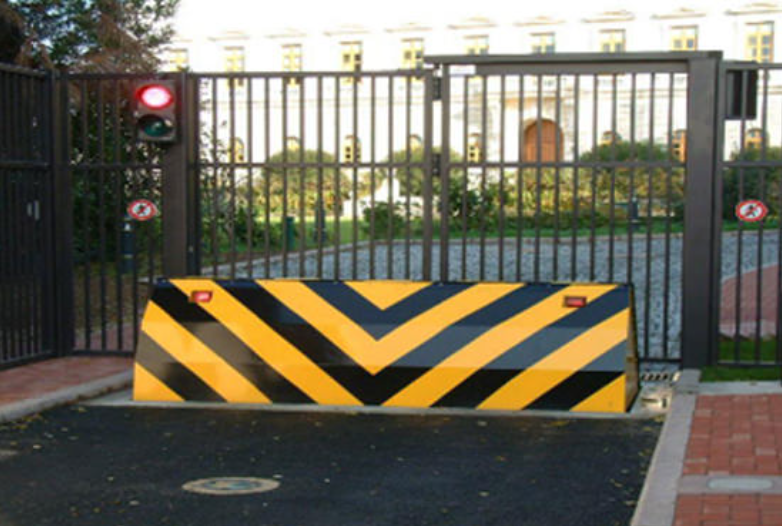
Traffic Control
Traffic control is often the most cost effective way in the mitigation of large blast effect. This is a prime example of a well designed vehicle control entrance.
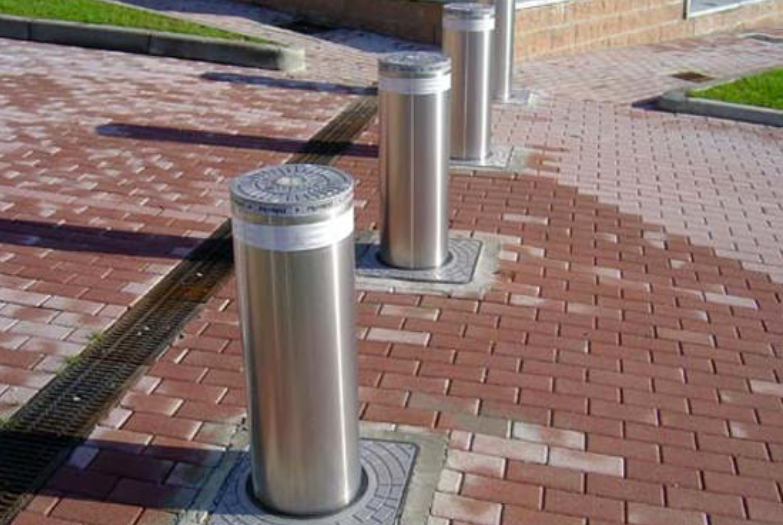
Retractable Bollards
A well proven product to provide vehicle stand off from buildings and public areas.
Vehicle borne improvised explosive devices ( VBIED’s ) and hand delivered bombs and explosives still remain the major threat to life. Fragmentation from both the charge itself and also the inclusion of nuts, bolts, nails and even hardened fragmentation also cause devastating injury and damage to people and buildings. This is where we are also able to introduce our extensive ballistic experience and again provide solutions not only against the initial blast itself but also against potential fragmentation.
Grenades are also becoming an increasingly common threat outside of the battlefield. Although far less onerous in terms of its blast wave and impulse compared to that of a larger device, the pressure is none the less extremely significant and the design of the weapon is such that it will introduce fragmentation into the environment in all directions. The power of the explosion will project the fragments faster than a conventional bullet.
Blast doors, blast windows, blast walls and blast products in particular are often designed to incorporate blast protection and also protection against fragmentation.
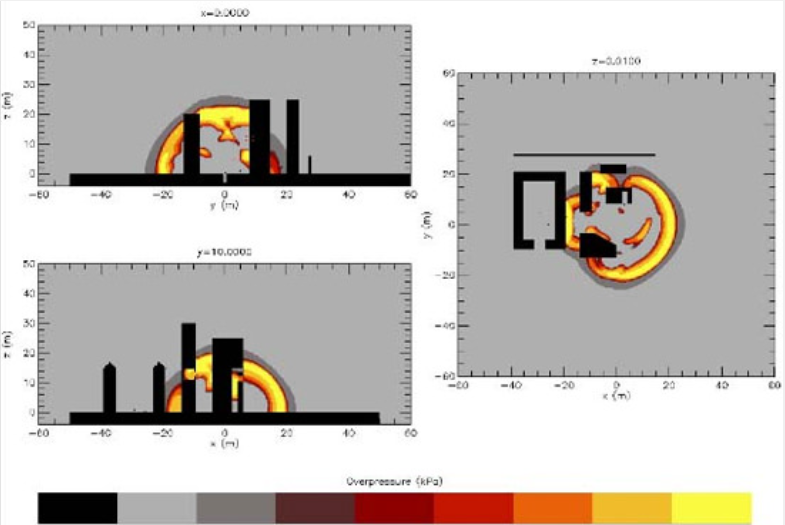
Blast window film has been a great asset as an economical method of offering enhanced blast protection to existing windows. However, it has a limited life span and a replacement program should always be considered at the actual time of installation. Computer modelling, as shown below, is a very cost effective way in which to determine if existing windows would benefit from the application of window film or if they actually need to be replaced with blast rated windows. Sometimes it is considered simply too expensive to incorporate blast mitigation into existing buildings but a cost effective computer blast effect model can produce surprisingly inexpensive methods to enhance blast protection.
Terrorist attacks and industrial explosions are both serious threats to people and buildings. Our specialist doors, windows, walls & safe rooms provide protection against these threats in all areas of work and home.
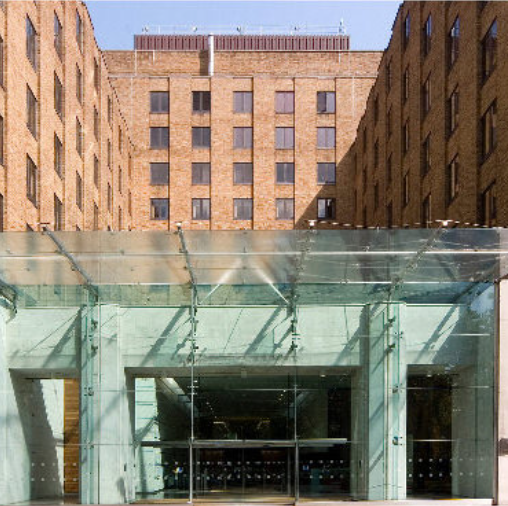
Fully Glazed Doors & Screens
Fully glazed openings and entrances provide a huge blast threat
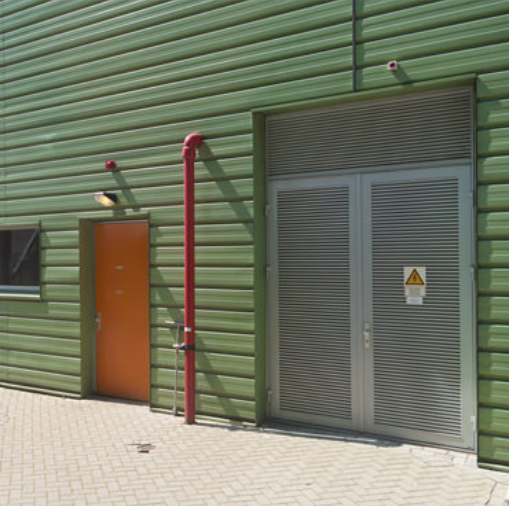
Commercial Installations
Key targets such as industrial, commercial, mining, petro-chemical installations.
Blast Protection
Terrorist attacks and industrial explosions are both serious threats to people and buildings. Our specialist doors and windows provide protection against these threats in all areas of work and home.
What are the most common types of blast threat within different areas ?
Terrorist Attacks
The biggest terrorist threat comes in the form of vehicle blasts, which can typlically deliver charges from 50lb to anything over thousands of pounds. (20kg to thousands of kg). Hand delivered charges typically 2lb – 50lb (1kg – 20kg). Postal device typically 8oz – 2lb (200gm – 1kg)
Fragmentation of any of these devices can also contain ceramic or metal items to extend injuries
(Engineering components, nuts, bolts, ball bearings, nails, screws, washers, ceramic pieces) Grenades, pipe bombs, IED’s (improvised explosive devices) VBIED’s (vehicle borne improvised explosive devices)
Industrial Explosions
Generally found to originate from chemical, gas or petro chemical processing plants. This type of explosion tends to cause widespread damage across a larger area due to the nature of the explosion.
Security is also encompassed within the HCIS (High Commission of Industrial Security) which also has synergies to TM5-1300, Structures to resist the effects of accidental explosions from the Department of Defense and ASCE manual 42, Design of structures to resist Nuclear weapons effects. There are also guidelines for evaluating the characteristics of vapour cloud explosions, Flash Fires and BLEVE’s and guidelines for evaluating process plant buildings for external explosions and fires.
High Security Locking
- Commercial buildings
- Private residences
- Industrial facilities
- Baggage Scanning rooms
- Hotels
- Government Buildings
- Public Places
- Transport Infrastructure
- Events
Technical Expertise
Blast analysis is a complicated area but we are able to computer generate models of Client’s buildings and with specialist software, we can then determine the associated pressures across doors and windows. This will then allow us to suggest the most appropriate product to meet that particular threat.
Alternatively, simply send us your performance specification in either charge size and distance, PSI, kN/m², lbs/ft², Ir, Pr, static or dynamic loading, GSA blast rating, whatever standard either you or your client work with.
Computer Blast Model
Computer blast model showing how blast waves move throughout buildings – section views.
| Application | Product | Blast Threat (kg) |
|---|---|---|
| Petrochemicals | Steel Doors / Windows | >1000kg |
| Terrorist Attack | Wood, Steel, Glass Doors, Windows, Screens | 1kg - >3000kg |
| Scanner Rooms / Post Rooms | Wood, Steel, Glass Doors, Windows, Screens | 200g - 20kg |
| Fragmentation | Wood, Steel, Glass Doors, Windows, Screens | Common Materials |
| Equivalent Values |
|---|
| Charge weight & distance (Dynamic load) EXV (Dynamic Load) kN/m2 (Static Load) PSI (Static Load) Bar (Static Load) kPa-msec (Impulse) lbs/ft2 |
Post Rooms & Scanning Areas
Post rooms and other baggage scanning areas are also susceptible to small explosions. Correctly designed doors, windows and vents all help to mitigate the explosive effects.
Frequently Asked Questions
What is blast consultancy?
Blast consultancy is the process of analysing how an explosion will interact with a building or site and then designing practical measures to reduce the risk to people and assets. It covers everything from vehicle-borne and hand-delivered IEDs to industrial explosions, and uses computational blast modelling plus tested blast doors, windows and walls to “design out” life-threatening situations wherever possible.
Why is blast protection more demanding than other forms of protection?
Blast protection is challenging because blast waves move in all directions, are channeled and funneled by buildings, and can even be bent around obstacles. That means pressure on each door, window and wall can vary dramatically. Specialist blast consultancy uses modelling to predict these effects so that protection – such as blast doors, blast windows, stand-off barriers and vents – is matched to the real pressures each element will see.
What information do you need to carry out a blast assessment?
Typically you’ll be asked for either:
Charge weight and stand-off distance, or
Required blast loads expressed as peak pressure and impulse (PSI, kN/m², bar, kPa-msec, lbs/ft²), or
A performance standard such as GSA rating or client blast criteria
Using this data, a computer model of the building is created to determine pressures across doors, windows and walls, and from that the most appropriate blast-rated products and mitigation measures can be specified.
What types of blast threat are considered?
Blast consultancy typically considers both terrorist and industrial blast threats, including:
Vehicle-borne IEDs (VBIEDs) delivering from tens of kilos to thousands of kilos of explosive
Hand-delivered and postal devices in the 200 g – 20 kg range
Grenades, pipe bombs and other IEDs, where fragmentation is a key hazard
Industrial explosions from chemical, gas and petro-chemical plants, which can cause widespread damage over large areas
Fragmentation from nuts, bolts, ball bearings, nails and other projectiles is also assessed, so that blast measures incorporate fragment protection where needed.
How can blast consultancy help with existing buildings and glazing?
For existing sites, blast consultancy can use computer blast models to check how current doors, windows and façades are likely to perform. This helps decide whether simple measures such as blast window film are sufficient, or whether full blast-rated window and door replacements are needed. In many cases, modelling identifies surprisingly cost-effective ways to enhance blast protection without major reconstruction.